
Bridging finance
Usually involves an incoming property and an outgoing property. It is commonly used when you want to buy first and sell afterwards, with the sale of the outgoing property forming part of the repayment strategy.
Bridging Finance
Bridging finance can help you purchase an incoming property before your outgoing property has been sold. The important part is understanding the total cost, the exit strategy and how different lenders structure the loan.
Last reviewed
Bridging finance is generally used when there is an incoming property and an outgoing property — for example, when you want to purchase a new property before your existing property has been sold.
The bridging loan provides temporary funding across the period between buying the new property and completing the sale of the existing one. The sale of the outgoing property usually forms a key part of the exit strategy.
This is different from an equity release loan, where there may be only one property used as security and the purpose is to release cash from that property's equity — for example, to renovate the property before selling it.
Both can provide access to property equity, but they are generally used for different situations.
Usually involves an incoming property and an outgoing property. It is commonly used when you want to buy first and sell afterwards, with the sale of the outgoing property forming part of the repayment strategy.
Usually involves one property being used as security to release cash from its available equity. This may be used for purposes such as renovating the property before sale or meeting another short-term funding requirement.
Bridging finance is generally used when you are buying one property before another property has been sold or settled.
Purchasing a new home before the existing home has been sold, with the sale proceeds forming part of the exit strategy.
Moving into a larger property before the current property has been sold and settled.
Purchasing a smaller replacement property first, then selling the existing property afterwards.
Purchasing a new investment property before the sale of another property has been completed.
Completing the purchase of a commercial property while another property is being sold to reduce or repay the bridging debt.
Managing a timing gap where the incoming property needs to settle before the outgoing property sale has completed.
Many bridging loans are structured so that some or all of the expected interest is capitalised into the loan rather than being paid monthly.
This means the total facility may include not only the amount required to complete the property transaction or repay existing debt, but also an allowance for interest and other approved costs during the bridging period.
If the outgoing property is sold and the bridge is repaid earlier than expected, the final interest cost may be lower because the loan has been outstanding for a shorter period. The way this is calculated will depend on the lender and the terms of the facility.
Bridging lenders can structure their pricing very differently. Comparing the interest rate alone can therefore give a misleading picture of the real cost.
The rate determines the interest charged while the loan remains outstanding, but it is only one component of the overall transaction cost.
Some lenders charge a separate risk fee, usually calculated as a percentage of the loan amount. On larger bridging facilities this can represent a substantial cost and is generally non-refundable.
Application, establishment, valuation, legal and other lender charges are separate from the risk fee and should also be included when comparing the total cost of a facility.
Interest, the risk fee and other approved lender costs may be added to the total loan facility rather than being paid separately in cash.
If the bridge is repaid earlier, the interest cost may reduce because the loan has been outstanding for less time. The risk fee, however, does not generally reduce simply because the loan is repaid early.
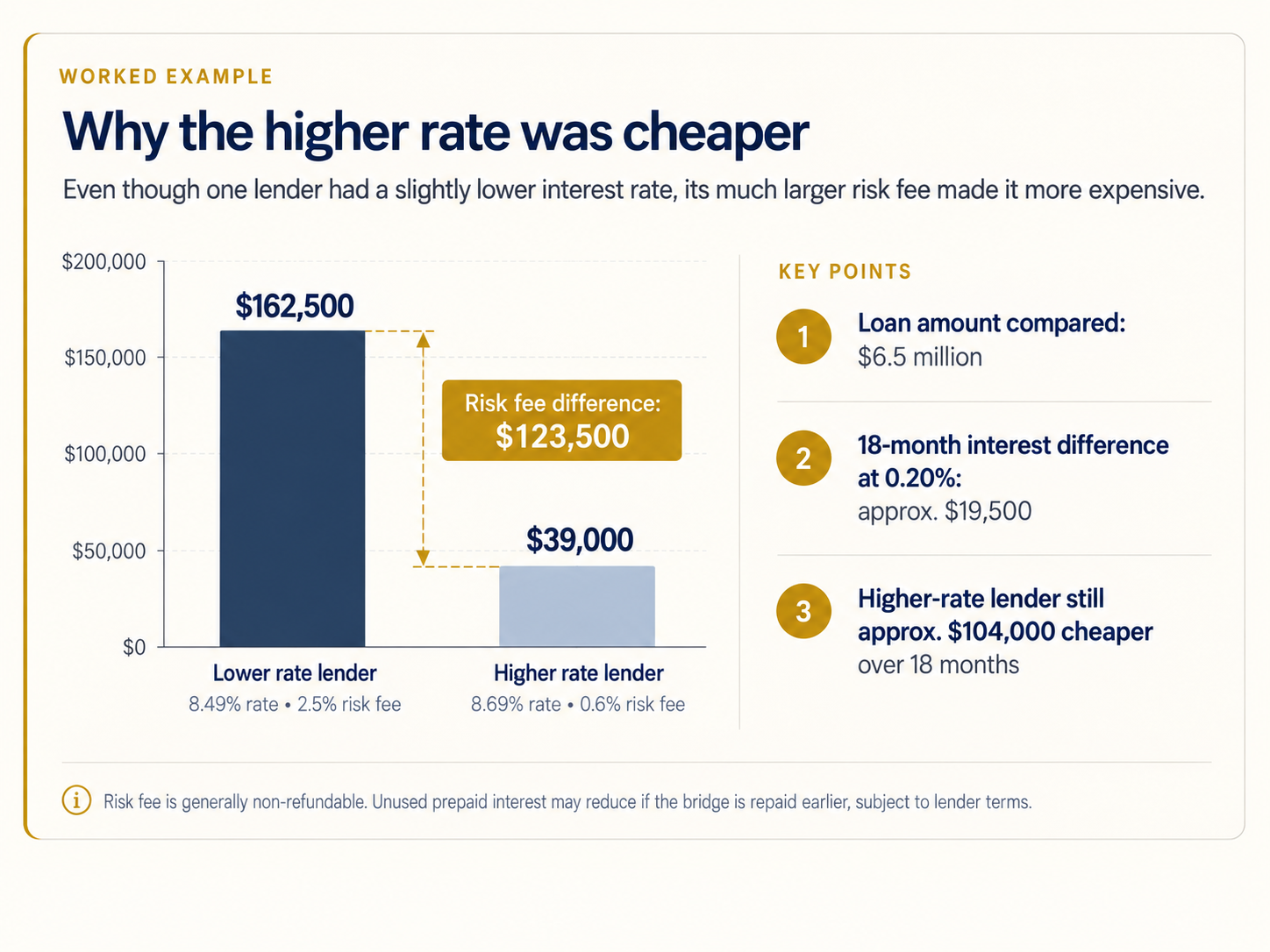
A recent bridging transaction involved a $6.5 million facility over an 18-month quoted term.
One lender offered an interest rate of 8.49%, but charged a 2.5% risk fee — equal to $162,500.
The alternative lender had an advertised rate of 9.14%, which was negotiated down to 8.69%. Although the interest rate was 0.20% higher, its risk fee was only 0.6%, or $39,000.
Over the full 18-month term, the additional interest from the 0.20% higher rate was approximately $19,500 on a simple-interest comparison. By contrast, the saving in risk fees was $123,500.
That meant the lender with the higher interest rate was still approximately $104,000 cheaper over the full quoted term before allowing for other costs or differences in the precise loan structure.
The result can become even more significant if the bridge is repaid early. Interest may reduce when the loan finishes sooner, subject to the lender's terms, while the risk fee is generally non-refundable.
A proper comparison should look at the complete structure of the facility rather than focusing on one headline figure.
Compare the expected interest over the likely bridging period, including how the lender treats capitalised interest and early repayment.
Risk fees can vary substantially between lenders and are commonly calculated as a percentage of the loan amount. On larger facilities, this can materially affect the overall cost.
Application, establishment, valuation, legal and other lender charges are separate from the risk fee and should be included in the total-cost comparison.
Interest, risk fees and other approved costs may be added to the total facility rather than being paid separately in cash.
The lender will usually want a clear and realistic exit strategy, commonly including the expected sale of the outgoing property.
Maximum terms, minimum interest periods, extension conditions and the ability to repay early can all affect the final cost.
Bridging capacity depends on the overall transaction, including the incoming property, outgoing property, existing debt and the proposed exit strategy.
The value of the outgoing property and the value or purchase price of the incoming property are important parts of the assessment.
Current mortgages and other secured debts need to be taken into account when calculating the total bridging requirement.
The lender may need to allow for the purchase price together with relevant transaction and settlement costs.
The expected net proceeds from the outgoing property will help determine how much debt is likely to remain after it is sold.
Depending on the lender and structure, income and the ability to meet ongoing obligations may still form part of the assessment.
A clear and realistic plan for selling the outgoing property and reducing or repaying the bridging debt is one of the most important parts of the application.
Bridging lenders can vary substantially in pricing, loan structure, acceptable properties and the way they assess the proposed exit strategy.
One lender may offer a lower interest rate but charge a significantly higher risk fee, while another may structure the same transaction very differently.
Maximum bridging periods, minimum interest requirements and extension conditions can vary between lenders.
The type, location and use of the incoming and outgoing properties can affect which lenders are prepared to consider the transaction.
Lenders may assess the expected sale of the outgoing property differently and may require different levels of supporting evidence.
My role as a mortgage and finance broker is to compare the complete transaction rather than simply finding the lowest advertised interest rate.
That means reviewing the interest cost, risk fee, application and establishment charges, loan term, exit strategy, property policy and the likely duration of the bridge.
On a larger transaction, even a small difference in the way a lender structures its fees can materially change the overall cost.
The exact process varies between lenders and transactions, but bridging finance will usually involve these stages.
Identify the incoming property, outgoing property, purchase timing and any existing debts that need to be repaid.
Consider the expected sale of the outgoing property, likely sale proceeds and how the bridging debt will ultimately be reduced or repaid.
Allow for existing debt, the incoming purchase, transaction costs, expected interest and applicable lender fees.
Review interest rates, risk fees, application costs, bridging terms and relevant lender policies.
Complete the required application documents and arrange valuations or other supporting information required by the lender.
Review the final terms and costs before completing the bridging facility and settling the incoming property.
Complete the sale of the outgoing property and use the agreed proceeds to reduce or repay the bridging debt.
A bridging loan is generally short-term finance used when there is an incoming property and an outgoing property. It can allow you to purchase the new property before the existing property has been sold, with the outgoing property sale forming part of the exit strategy.
Bridging finance usually involves two property transactions: an incoming property and an outgoing property. Equity release is different and generally involves one property being used as security to access cash from available equity, for example to fund renovations before sale.
The maximum bridging period varies between lenders and transactions. The proposed sale timeframe for the outgoing property and the lender's requirements will usually be important.
Not always. Some bridging facilities allow interest to be capitalised into the total loan amount rather than requiring regular monthly interest payments.
Capitalised interest is interest that is added to the loan balance rather than being paid regularly. The total facility may therefore include the amount required for the property transaction together with estimated interest and other approved costs.
A risk fee is a separate lender charge that is commonly calculated as a percentage of the loan amount. It is different from application, establishment, valuation or legal fees and can materially affect the overall cost of the facility.
Not necessarily. Depending on the lender and structure, interest, risk fees, application fees and other approved costs may be capitalised into the total facility rather than being paid separately in cash.
No. A lender with a lower interest rate may charge a substantially higher risk fee or other costs. The total expected cost of the facility should be compared rather than the headline rate alone.
If the bridge is repaid earlier, the total interest cost may be lower because the facility has been outstanding for less time. A risk fee, however, may remain payable in full and may not reduce simply because the loan ends earlier.
The exit strategy is the planned way the bridging debt will be reduced or repaid. In a typical bridging transaction, this commonly includes the sale of the outgoing property.