The guide
Understand the subject before making the decision
Reverse mortgages are often discussed in extremes. Some people hear only the risks. Others hear only the potential benefits.
That can make it difficult for homeowners and their families to work out what is actually relevant to their own situation.
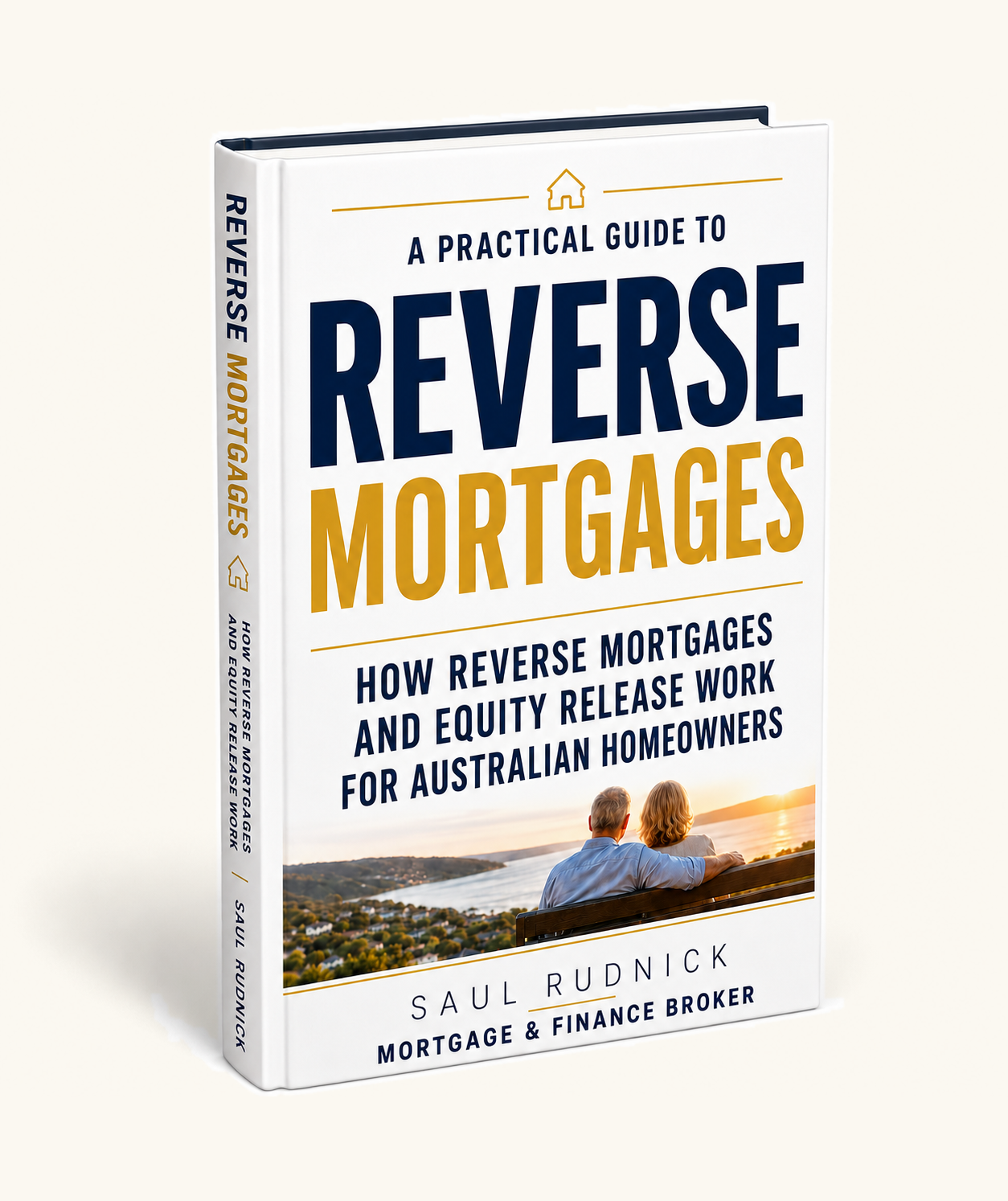
A Practical Guide to Reverse Mortgages was written to help bridge that gap. It explains in plain English how reverse mortgages and equity release work, the costs and risks involved, the safeguards that apply, and situations in which they may or may not be worth considering.
The book also looks beyond reverse mortgages. It considers alternatives such as downsizing, refinancing, using savings or other assets, and the Australian Government's Home Equity Access Scheme.
The aim is not to persuade readers to take out a reverse mortgage. It is to help them understand the choices well enough to make a more informed decision and know what questions to ask before proceeding.
Who this book is for
You do not need to have decided that you want a reverse mortgage
This book is for Australian homeowners and families who want to understand their options before making up their mind.
- You have mainly heard negative things about reverse mortgages but have never looked into how they actually work.
- You are wondering whether the equity in your home could help improve your financial flexibility in retirement.
- You are concerned about the effect accessing equity may have on your estate or your children's inheritance.
- You have heard that reverse mortgages are expensive and want to understand the actual costs and trade-offs before dismissing or considering them.
- You are comparing a reverse mortgage with alternatives such as downsizing, refinancing, using savings or other assets, or the Home Equity Access Scheme.
- You are helping a parent or family member understand the options available to them.
- You are considering how home equity might help with renovations, aged care, debt repayment, helping family or changing retirement needs.
- You are facing a decision under pressure and want to understand the alternatives before proceeding.
- You simply do not feel comfortable making a major financial decision about something you do not fully understand.
The objective is not to convince you that a reverse mortgage is the answer. It is to help you understand whether it should even form part of the conversation.
Inside the book
What you will learn
How reverse mortgages and equity release work
When accessing home equity may be worth considering
Interest, costs and how the loan balance can change over time
Important risks, safeguards and consumer protections
Family, inheritance and future-equity considerations
Alternatives including downsizing, refinancing, savings and the Home Equity Access Scheme
Practical situations where different circumstances may lead to different decisions
Questions worth asking before choosing a product or proceeding with an application
Practical Tools
Designed to be used, not just read
The book combines detailed explanations with practical tools designed to help readers apply the information to their own circumstances.
Practical Worksheets
Structured worksheets help readers identify priorities, compare alternatives, consider future needs and prepare questions before making a decision.
16–20 Detailed Graphics
Visual explanations are used throughout the book to make complex ideas, processes and comparisons easier to understand.
Practical Situations
Real-world examples show why different circumstances, needs and priorities can lead to very different decisions.
Inside the book
See how the book explains complex decisions visually
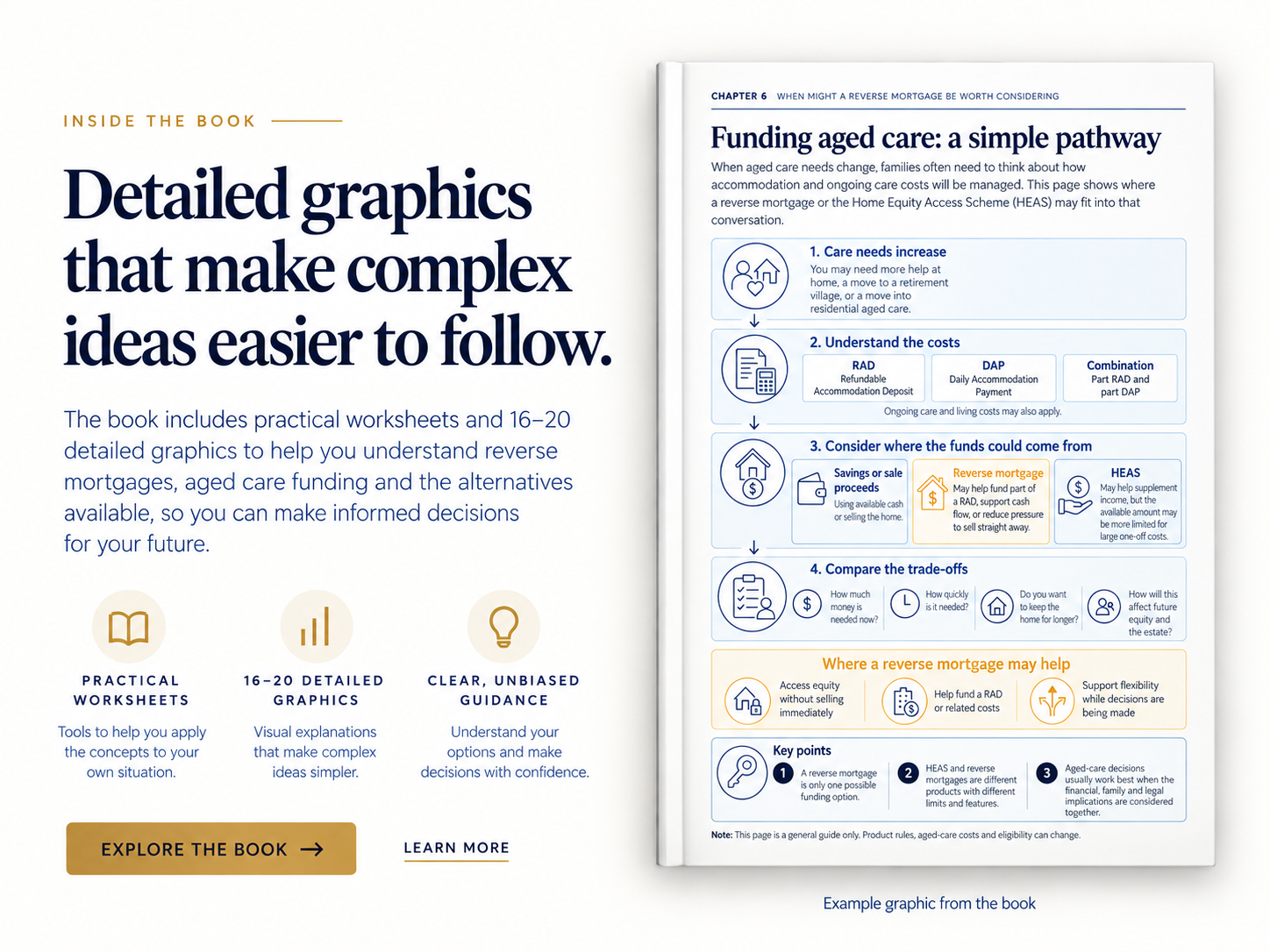
The book includes approximately 16 to 20 detailed graphics designed to make complex ideas easier to follow. These pages help readers understand how reverse mortgages, alternatives and related decisions may fit into real-life situations.
- Plain-English visual explanations, not just text-heavy discussion
- Useful for readers comparing reverse mortgages with alternatives
- Designed to help families think more clearly during pressured decisions
- Includes practical examples such as aged care, changing retirement needs and accessing equity
Example shown: a visual recap from the chapter on funding aged care, showing how families may compare savings, sale proceeds, reverse mortgage options and the Home Equity Access Scheme when care needs change.
Example page
Detailed graphics for clearer decisions
The book includes around 16 to 20 detailed graphics designed to make complex ideas easier to understand. These visual pages help readers follow situations step by step and see where different options may fit.
Step-by-step pathways
Complex situations are broken into clear stages so readers can understand how decisions may unfold.
Option comparisons
Graphics can show where reverse mortgages, the Home Equity Access Scheme and other alternatives may fit in the conversation.
Clearer trade-offs
Important costs, timing issues and future considerations can be understood more easily in a visual format.